Filters
Question type

Study Flashcards

For the formation of 1 mol of nitrosyl chloride at a given temperature,ΔrH = -37 kJ/mol. NO(g) + ½ Cl2(g) → NOCl(g) The activation energy for this reaction is 81 kJ/mol.What is the activation energy for the reverse reaction?


A) 81 kJ/mol
B) 44 kJ/mol
C) 118 kJ/mol
D) -37 kJ/mol
E) -118 kJ/mol

F) C) and E)
G) B) and D)

Correct Answer

verifed

verified

A student analyzed a first-order reaction and obtained the graph below.Unfortunately,the student forgot to label the axes.What are the correct labels for the x and y axes? A student analyzed a first-order reaction and obtained the graph below.Unfortunately,the student forgot to label the axes.What are the correct labels for the x and y axes?   A)  x axis = time,y axis = ln[A] B)  x axis = ln[time],y axis = [A].. C)  x axis = ln[time],y axis = [A] D)  x axis = time,y axis = 1/[A] E)  x axis = 1/time,y axis = 1/[A]


A) x axis = time,y axis = ln[A]
B) x axis = ln[time],y axis = [A]..
C) x axis = ln[time],y axis = [A]
D) x axis = time,y axis = 1/[A]
E) x axis = 1/time,y axis = 1/[A]

F) A) and C)
G) A) and B)

Correct Answer

verifed

verified

The Arrhenius equation, The Arrhenius equation,   ,relates the rate constant of reaction and temperature.A plot of ____ versus 1/T will yield a straight line with a slope of -E<sub>a</sub>/R. A)  k<sub>2</sub>/k<sub>1</sub> B)  -E<sub>a</sub> C)  ln(k)  D)    E)  1/RT ,relates the rate constant of reaction and temperature.A plot of ____ versus 1/T will yield a straight line with a slope of -Ea/R.


A) k2/k1
B) -Ea
C) ln(k)
D) The Arrhenius equation,   ,relates the rate constant of reaction and temperature.A plot of ____ versus 1/T will yield a straight line with a slope of -E<sub>a</sub>/R. A)  k<sub>2</sub>/k<sub>1</sub> B)  -E<sub>a</sub> C)  ln(k)  D)    E)  1/RT
E) 1/RT

F) A) and E)
G) A) and D)

Correct Answer

verifed

verified

What is the overall order of the reaction NO(g) + O3(g) → NO2(g) + O2(g) if the reaction proceeds via the rate expression given below. What is the overall order of the reaction NO(g) + O<sub>3</sub>(g) → NO<sub>2</sub>(g) + O<sub>2</sub>(g) if the reaction proceeds via the rate expression given below.   A)  Zero-order B)  First-order C)  Second-order D)  Third-order E)  Fourth-order


A) Zero-order
B) First-order
C) Second-order
D) Third-order
E) Fourth-order

F) A) and C)
G) None of the above

Correct Answer

verifed

verified

How many mechanistic steps are depicted by in this potential energy diagram? How many mechanistic steps are depicted by in this potential energy diagram?   A)  one step B)  two steps C)  three steps D)  four steps E)  five steps


A) one step
B) two steps
C) three steps
D) four steps
E) five steps

F) B) and C)
G) A) and E)

Correct Answer

verifed

verified

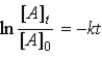
Which of the following is not a correct representation of the integrated rate expression for a decomposition first-order reaction?


A) Which of the following is not a correct representation of the integrated rate expression for a decomposition first-order reaction? A)    B)    C)    D)    E)
B) Which of the following is not a correct representation of the integrated rate expression for a decomposition first-order reaction? A)    B)    C)    D)    E)
C) Which of the following is not a correct representation of the integrated rate expression for a decomposition first-order reaction? A)    B)    C)    D)    E)
D) Which of the following is not a correct representation of the integrated rate expression for a decomposition first-order reaction? A)    B)    C)    D)    E)
E) Which of the following is not a correct representation of the integrated rate expression for a decomposition first-order reaction? A)    B)    C)    D)    E)

F) A) and C)
G) A) and E)

Correct Answer

verifed

verified

The rate constant at 366 K for a first-order reaction is 7.7 × 10⁻³ s-1 and the activation energy is 15.9 kJ/mol.What is the value of the frequency factor,A,in the Arrhenius equation? (R = 8.314 J/K⋅mol)


A) 0.0047 s-1
B) 0.70 s-1
C) 0.93 s-1
D) 1.1 s-1
E) 1.4 s-1

F) A) and B)
G) A) and C)

Correct Answer

verifed

verified

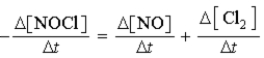
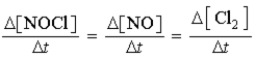
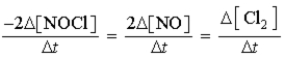
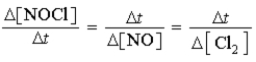
Which of the given relationships correctly compares the rates of the reactants and products for the reaction below? 2 NOCl(g) → 2 NO(g) + Cl2(g)


A) Which of the given relationships correctly compares the rates of the reactants and products for the reaction below? 2 NOCl(g) → 2 NO(g) + Cl<sub>2</sub>(g)  A)    B)    C)    D)    E)
B) Which of the given relationships correctly compares the rates of the reactants and products for the reaction below? 2 NOCl(g) → 2 NO(g) + Cl<sub>2</sub>(g)  A)    B)    C)    D)    E)
C) Which of the given relationships correctly compares the rates of the reactants and products for the reaction below? 2 NOCl(g) → 2 NO(g) + Cl<sub>2</sub>(g)  A)    B)    C)    D)    E)
D) Which of the given relationships correctly compares the rates of the reactants and products for the reaction below? 2 NOCl(g) → 2 NO(g) + Cl<sub>2</sub>(g)  A)    B)    C)    D)    E)
E) Which of the given relationships correctly compares the rates of the reactants and products for the reaction below? 2 NOCl(g) → 2 NO(g) + Cl<sub>2</sub>(g)  A)    B)    C)    D)    E)

F) A) and B)
G) C) and D)

Correct Answer

verifed

verified

Circle the catalyst in the following mechanism. Circle the catalyst in the following mechanism.

Correct Answer

verifed

verified

What is the name given to a substance that increases the rate of a chemical reaction but is not itself consumed?


A) catalyst
B) reactant
C) intermediate
D) enthalpy
E) rate constant

F) A) and B)
G) None of the above

Correct Answer

verifed

verified

For which of the following hypothetical rate laws would the units of the rate constant have the general form M-1·h−1?


A) Reaction rate = k[A]2
B) Reaction rate = k
C) Reaction rate = k[A]..
D) Reaction rate = k[A]
E) Reaction rate = k[A]4

F) D) and E)
G) C) and E)

Correct Answer

verifed

verified

The rate law for a reaction is rate = k[A]2[B].Which of the following mixtures of reactants will give the smallest initial rate?


A) 1.0 M A and 1.0 M B
B) 2.0 M A and 0.50 M B
C) 0.50 M A and 0.50 M B
D) 0.125 M A and 3.0 M B
E) 1.5 M A and 0.50 M B

F) C) and D)
G) B) and D)

Correct Answer

verifed

verified

The rate constant for a first-order reaction is 1.7 × 10⁻² s-1 at 676 K and 3.9 × 10⁻² s-1 at 880 K.Determine the activation energy of the reaction.(R = 8.314 J/K⋅mol)


A) 8.6 kJ/mol
B) 8.7 kJ/mol
C) 26 kJ/mol
D) 2400 kJ/mol
E) 21 kJ/mol

F) C) and D)
G) D) and E)

Correct Answer

verifed

verified

The reaction A → B follows first-order kinetics with a half-life of 21.7 hours.If the concentration of A is 0.023 M after 48.0 hours,what was the initial concentration of A?


A) 0.0050 M
B) 0.051 M
C) 0.51 M
D) 0.11 M
E) 2.0 M

F) A) and E)
G) C) and D)

Correct Answer

verifed

verified

Which of the following statements is true of the Arrhenius equation?


A) The factor Which of the following statements is true of the Arrhenius equation? A)  The factor   always has a value more than 1. B)  Ea represents the fraction of molecules having the minimum energy required for a reaction. C)  It can be used to calculate E<sub>a</sub> from the temperature dependence of the rate constant. D)  It can be used to calculate the rate constant if   is known. E)  The factor   always has a value more than 10. always has a value more than 1.
B) Ea represents the fraction of molecules having the minimum energy required for a reaction.
C) It can be used to calculate Ea from the temperature dependence of the rate constant.
D) It can be used to calculate the rate constant if Which of the following statements is true of the Arrhenius equation? A)  The factor   always has a value more than 1. B)  Ea represents the fraction of molecules having the minimum energy required for a reaction. C)  It can be used to calculate E<sub>a</sub> from the temperature dependence of the rate constant. D)  It can be used to calculate the rate constant if   is known. E)  The factor   always has a value more than 10. is known.
E) The factor Which of the following statements is true of the Arrhenius equation? A)  The factor   always has a value more than 1. B)  Ea represents the fraction of molecules having the minimum energy required for a reaction. C)  It can be used to calculate E<sub>a</sub> from the temperature dependence of the rate constant. D)  It can be used to calculate the rate constant if   is known. E)  The factor   always has a value more than 10. always has a value more than 10.

F) A) and D)
G) A) and C)

Correct Answer

verifed

verified

For the hypothetical reaction aA → products,the experimental data showed the following behavior (below) .What is the reaction order with respect to reactant A? For the hypothetical reaction aA → products,the experimental data showed the following behavior (below) .What is the reaction order with respect to reactant A?   A)  zero order B)  first order C)  second order D)  third order E)  fourth order


A) zero order
B) first order
C) second order
D) third order
E) fourth order

F) A) and C)
G) B) and C)

Correct Answer

verifed

verified

For the overall reaction 2A + B → C Which of the following mechanisms is/are consistent with a rate equation of rate = k[A]2[B]?


A) A + B For the overall reaction 2A + B → C Which of the following mechanisms is/are consistent with a rate equation of rate = k[A]<sup>2</sup>[B]? A)  A + B   I (fast)  I + A → C (slow)  B)  A + B → I (slow)  I + A → C (fast)  C)  2A → I (slow)  B + I → C (fast)  D)  2A   I (fast)  I + B → C (slow)  E)  Answers a and d are both correct. I (fast)
I + A → C (slow)
B) A + B → I (slow)
I + A → C (fast)
C) 2A → I (slow)
B + I → C (fast)
D) 2A For the overall reaction 2A + B → C Which of the following mechanisms is/are consistent with a rate equation of rate = k[A]<sup>2</sup>[B]? A)  A + B   I (fast)  I + A → C (slow)  B)  A + B → I (slow)  I + A → C (fast)  C)  2A → I (slow)  B + I → C (fast)  D)  2A   I (fast)  I + B → C (slow)  E)  Answers a and d are both correct. I (fast)
I + B → C (slow)
E) Answers a and d are both correct.

F) C) and D)
G) B) and C)

Correct Answer

verifed

verified

Below is a proposed mechanism for the decomposition of H2O2. H2O2 + I- → H2O + IO- Slow H2O2 + IO- → H2O + O2 + I- Fast Which of the following statements is incorrect?


A) IO- is a catalyst.
B) I- is a catalyst.
C) The net reaction is 2H2O2 → 2H2O + O2.
D) The reaction is first-order with respect to [I-].
E) The reaction is first-order with respect to [H2O2].

F) All of the above
G) A) and B)

Correct Answer

verifed

verified

For the second-order reaction below,the initial concentration of reactant A is 0.24 M.If the rate constant for the reaction is 1.5 × 10⁻² M-1s-1,what is the concentration of A after 265 seconds? 2A → B + C Rate = k[A]2


A) 0.12 M
B) 0.19 M
C) 0.95 M
D) 4.0 M
E) 5.2 M

F) None of the above
G) C) and E)

Correct Answer

verifed

verified

A first-order reaction is 40.0% complete at the end of 48.6 minutes.What is the value of the rate constant?


A) 1.89 × 10⁻² min-1
B) 1.05 × 10⁻² min-1
C) 53.0 min-1
D) 95.1 min-1
E) none of these

F) A) and B)
G) A) and C)

Correct Answer

verifed

verified

Showing 41 - 60 of 72

Related Exams

Show Answer