Filters
Question type

Study Flashcards

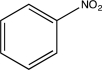
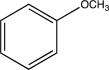
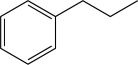
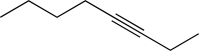
Which of the following will undergo a Birch reduction at the highest rate?


A) Which of the following will undergo a Birch reduction at the highest rate? A)    B)    C)    D)    E)
B) Which of the following will undergo a Birch reduction at the highest rate? A)    B)    C)    D)    E)
C) Which of the following will undergo a Birch reduction at the highest rate? A)    B)    C)    D)    E)
D) Which of the following will undergo a Birch reduction at the highest rate? A)    B)    C)    D)    E)
E) Which of the following will undergo a Birch reduction at the highest rate? A)    B)    C)    D)    E)

F) A) and B)
G) None of the above

Correct Answer

verifed

verified

Which of the following steps is most endothermic?


A) Which of the following steps is most endothermic? A)    B)    C)    D)    E) All of these steps are equally endothermic.
B) Which of the following steps is most endothermic? A)    B)    C)    D)    E) All of these steps are equally endothermic.
C) Which of the following steps is most endothermic? A)    B)    C)    D)    E) All of these steps are equally endothermic.
D) Which of the following steps is most endothermic? A)    B)    C)    D)    E) All of these steps are equally endothermic.
E) All of these steps are equally endothermic.

F) B) and D)
G) All of the above

Correct Answer

verifed

verified

Which of the following elementary steps does not occur in the reaction below? Which of the following elementary steps does not occur in the reaction below?   A) Bond homolysis B) Electrophilic addition C) Radical addition D) Bimolecular homolytic substitution E) All of these steps occur in the reaction shown.


A) Bond homolysis
B) Electrophilic addition
C) Radical addition
D) Bimolecular homolytic substitution
E) All of these steps occur in the reaction shown.

F) A) and D)
G) A) and E)

Correct Answer

verifed

verified

Arrange the compounds below in order of increasing rate of halogenation. Arrange the compounds below in order of increasing rate of halogenation.

Correct Answer

verifed

verified

Draw single-barbed arrows to show homolytic bond cleavage in Br2,shown below.Fill in the products of the reaction. Draw single-barbed arrows to show homolytic bond cleavage in Br<sub>2</sub>,shown below.Fill in the products of the reaction.

Correct Answer

verifed

verified

Predict the major product of the reaction below,and draw a detailed mechanism for the production of Br2 from NBS as it would occur in this reaction. Predict the major product of the reaction below,and draw a detailed mechanism for the production of Br<sub>2</sub> from NBS as it would occur in this reaction.

Correct Answer

verifed

verified

Predict the product of the following reaction. Predict the product of the following reaction.   A)    B)    C)    D)    E)


A) Predict the product of the following reaction.   A)    B)    C)    D)    E)
B) Predict the product of the following reaction.   A)    B)    C)    D)    E)
C) Predict the product of the following reaction.   A)    B)    C)    D)    E)
D) Predict the product of the following reaction.   A)    B)    C)    D)    E)
E) Predict the product of the following reaction.   A)    B)    C)    D)    E)

F) A) and E)
G) A) and B)

Correct Answer

verifed

verified

What is the missing starting material for the following reaction sequence? What is the missing starting material for the following reaction sequence?   A)    B)    C)    D)    E)


A) What is the missing starting material for the following reaction sequence?   A)    B)    C)    D)    E)
B) What is the missing starting material for the following reaction sequence?   A)    B)    C)    D)    E)
C) What is the missing starting material for the following reaction sequence?   A)    B)    C)    D)    E)
D) What is the missing starting material for the following reaction sequence?   A)    B)    C)    D)    E)
E) What is the missing starting material for the following reaction sequence?   A)    B)    C)    D)    E)

F) A) and D)
G) All of the above

Correct Answer

verifed

verified

Predict the major product of the reaction below,and draw a mechanism for the radical addition step. Predict the major product of the reaction below,and draw a mechanism for the radical addition step.

Correct Answer

verifed

verified

Predict the major product of the reaction below,and draw complete mechanisms for the initiation and propagation steps. Predict the major product of the reaction below,and draw complete mechanisms for the initiation and propagation steps.

Correct Answer

verifed

verified

Showing 41 - 50 of 50

Related Exams

Show Answer